
Introduction to DIY Science Experiment Kits
Learning doesn’t always have to be about reading textbooks or memorizing formulas. For kids, the best way to understand science is often through hands-on activities that allow them to see real-world applications. That’s exactly where DIY Physical Model Science Experiment Educational Toys come in.
These kits are designed to combine play with learning. Instead of passively watching or reading, children actively engage in building, assembling, and experimenting. For example, a small pulley model or a solar-powered car kit can help a child understand principles of mechanics or renewable energy far better than just reading about it.
DIY projects also nurture curiosity. Kids naturally ask questions like, “Why does this wheel move?” or “How does the solar panel make the motor run?”—and these kits provide the perfect opportunity to explore answers through experimentation.
In short, these educational toys transform classrooms and homes into mini-laboratories, where fun meets science in the most effective way.
Buy Here
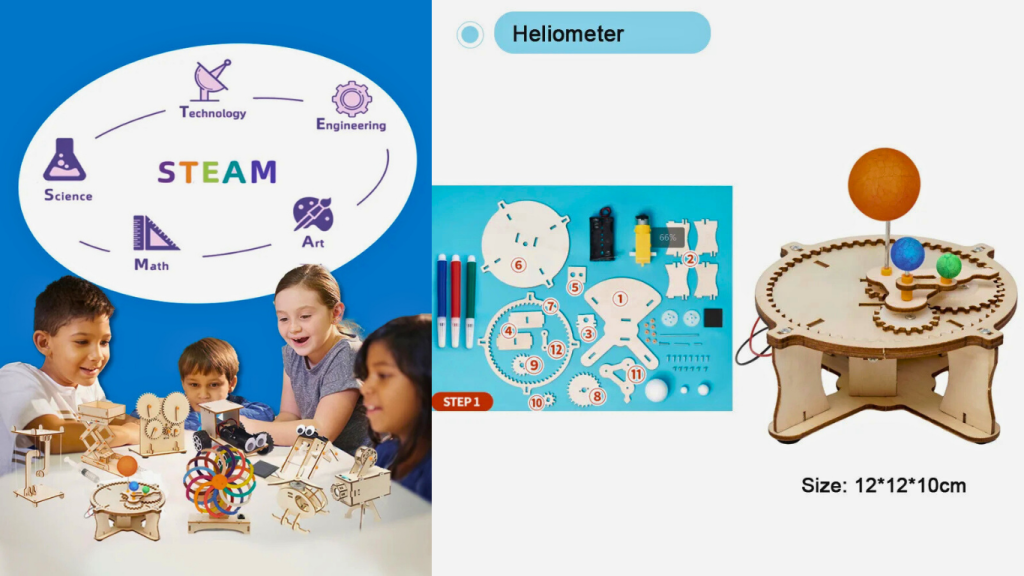
Key Features of DIY Physical Model Kits
DIY science experiment kits are thoughtfully designed to be engaging, safe, and easy to assemble. Some standout features include:
- Step-by-Step Instructions – Most kits come with illustrated manuals or guides, making it easy for kids to assemble the models with minimal help.
- Hands-On Assembly – From cutting, joining, and fixing parts to testing outcomes, the kits ensure kids stay involved throughout the process.
- Safe Materials – Most models use non-toxic wood, safe plastics, and child-friendly adhesives to ensure safety during play.
- Reusable Components – Many kits allow children to disassemble and rebuild, encouraging experimentation and creativity.
- Portable and Compact – Designed for classrooms and homes, these kits are lightweight and easy to store.
This thoughtful balance of fun, safety, and education makes them a hit with both kids and parents.
Click Here

Benefits of Educational Toy Projects
These kits aren’t just toys—they’re tools for development. The benefits include:
- Encouraging Creativity – Kids learn to think outside the box when they see how small parts combine to make functioning models.
- Boosting Problem-Solving Skills – During assembly, children face challenges such as fitting parts correctly, which trains their analytical thinking.
- Teamwork & Collaboration – When used in schools, kids often work in groups, learning the importance of cooperation.
- Confidence Building – Completing a project gives kids a sense of achievement, motivating them to take on more challenges.
- Learning through Play – Instead of rote memorization, these kits ensure kids grasp concepts naturally while having fun.
In essence, DIY physical model toys help children learn science without realizing they’re studying.
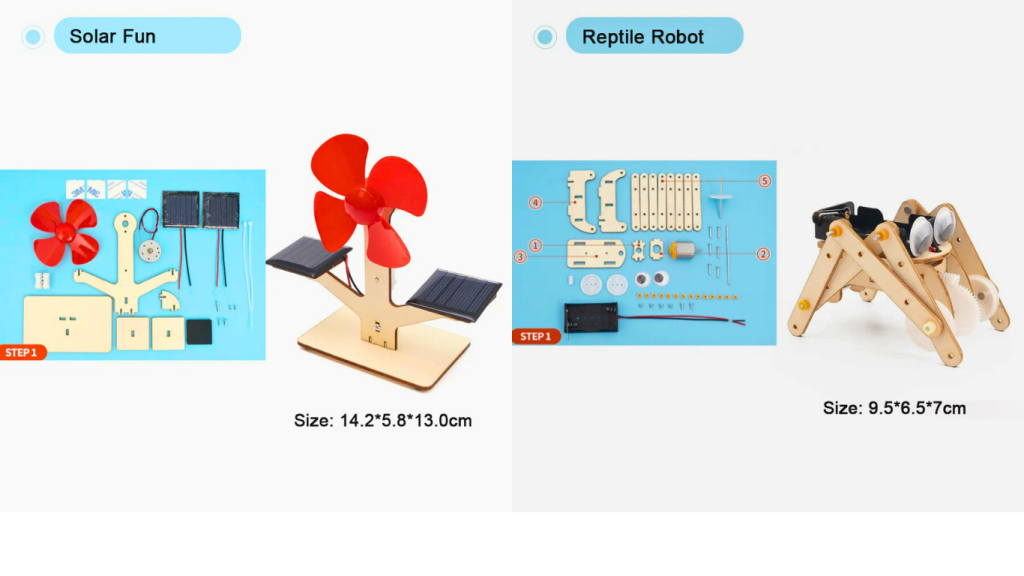
Types of Science Experiment DIY Kits
Not all DIY kits are the same—they cover a wide range of scientific principles. Some common categories include:
- Physics-Based Models – Levers, pulleys, gears, catapults, and balance scales help kids explore mechanical forces.
- Energy Kits – Solar cars, wind turbines, and battery-powered machines teach renewable and electrical energy concepts.
- Motion & Robotics – Simple robotics kits introduce kids to programming and automation at an early stage.
- Hydraulic & Pneumatic Models – Demonstrates fluid mechanics using syringes, tubes, and pumps.
Each type is tailored to different ages and skill levels, ensuring every child finds something exciting to build and explore.
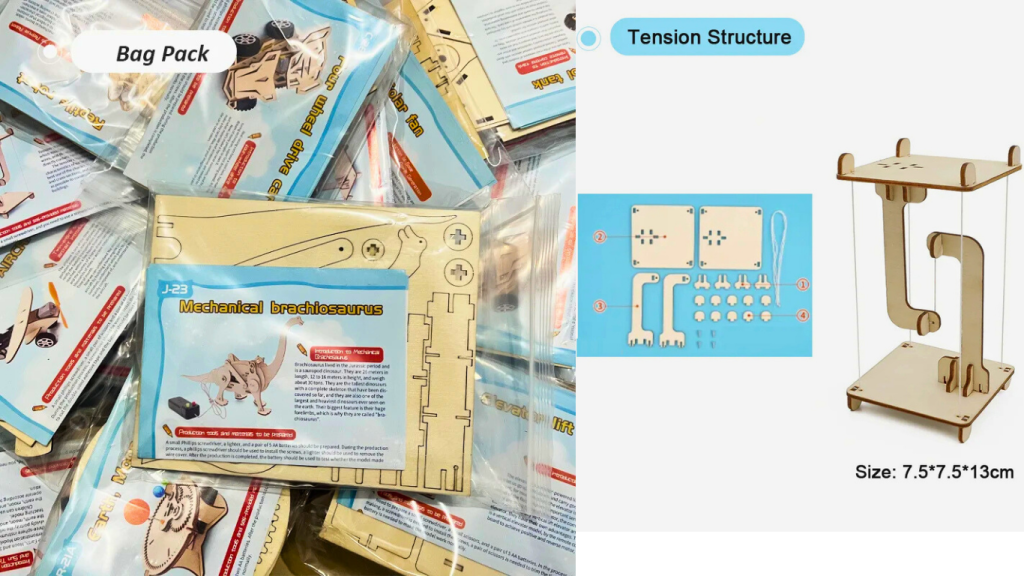
Skill Development through DIY Projects
DIY science kits are not just about fun—they actively shape a child’s mental and physical skills.
- Cognitive Skills – Kids learn how cause and effect work. For instance, connecting wires correctly makes a light bulb glow.
- Fine Motor Skills – Assembling small parts helps develop hand-eye coordination and dexterity.
- STEM Learning – Science, Technology, Engineering, and Math concepts are introduced in a practical, approachable way.
- Critical Thinking – When something doesn’t work, kids learn to troubleshoot and try new approaches.
- Innovation Mindset – By experimenting with models, children start imagining new possibilities and inventions.
With consistent exposure to these kits, kids grow more curious, creative, and confident—qualities that are vital for future innovators.