
Introduction to High-Power Induction Cookers
Induction cooking has become one of the most revolutionary methods in modern kitchens. Unlike traditional gas or electric stoves, an induction cooker uses electromagnetic energy to directly heat cookware. This results in faster, safer, and more energy-efficient cooking. Over the past decade, induction cookers have moved from being a luxury kitchen appliance to an essential tool in both households and commercial kitchens.
Now, when it comes to commercial induction cookers, the most common high-power ranges are 3500W and 5000W. These machines are designed not just for occasional use but for heavy-duty, continuous cooking. Whether you are running a restaurant, a catering business, or even cooking for a large family, these high-power induction cookers provide unmatched speed, precision, and reliability.
Think of them as the “workhorses” of the kitchen. A 2000W household cooker may be fine for boiling water or making a quick stir-fry, but if you need to cook large portions of food in a short time, you’ll need at least 3500W or more. And for professional kitchens that operate non-stop, the 5000W induction cooker is often the go-to choice.
In this article, we’ll break down everything you need to know about 3500W and 5000W commercial induction cookers, their differences, features, and whether you should consider one for your home or business.
Buy Here
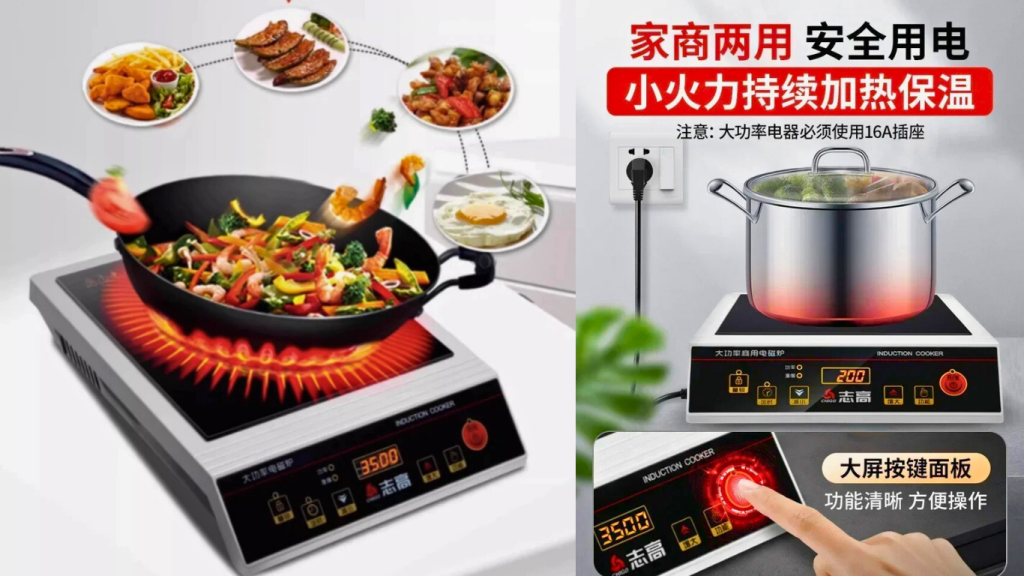
Understanding the Power Range – 3500W vs. 5000W
When it comes to induction cookers, wattage matters. The wattage determines how quickly and how powerfully the unit can heat food. Both 3500W and 5000W induction cookers are considered high-power models, but they serve slightly different purposes.
Key Differences Between 3500W and 5000W Induction Cookers
- Heating Speed – A 5000W unit heats up faster than a 3500W cooker. If you’re boiling 10 liters of water, the 5000W will save you several minutes.
- Cooking Capacity – 3500W is excellent for medium to large portions, but if you’re running a busy commercial kitchen, 5000W handles heavy loads effortlessly.
- Electricity Requirements – A 3500W unit can often run on a standard 220V household outlet (depending on country standards), while a 5000W unit may require a dedicated power line due to higher current draw.
- Durability for Continuous Use – Both are durable, but the 5000W cooker is built for non-stop commercial use.
- Price Difference – Naturally, a 5000W unit costs more than a 3500W, but the difference pays off in performance for large-scale cooking.
Which Power Range is Best for Household vs. Commercial Use?
- Households and Small Cafes: A 3500W induction cooker is more than enough. It gives you professional-level speed without overwhelming your electricity system.
- Hotels, Catering Businesses, Large Restaurants: A 5000W cooker is the smarter choice. These establishments often need to prepare large quantities of food in record time, and the 5000W model ensures efficiency.
- Mixed Use: If you cook occasionally at home but also need a machine for small events or catering, the 3500W provides a good balance.
The general rule? The larger your cooking needs, the higher the wattage you should choose.
Click Here
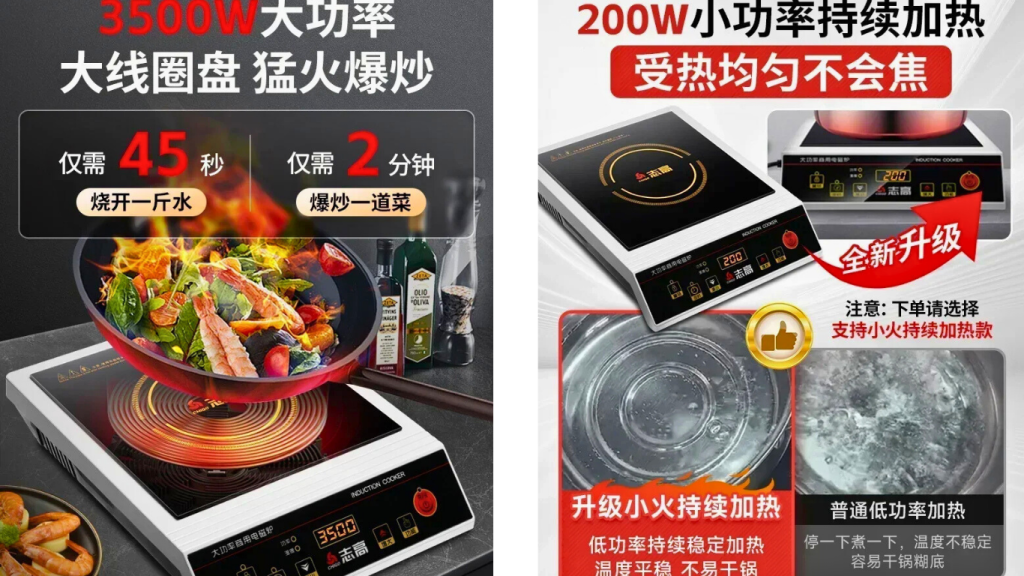
Features of a 3500W High-Power Induction Cooker
The 3500W induction cooker is a favorite among both households with big families and small businesses like cafes and food stalls. It provides professional-level cooking performance without demanding as much power as the heavy-duty 5000W models.
Heating Speed and Energy Efficiency
A 3500W induction cooker is capable of bringing water to a boil in just a few minutes. Compared to a traditional gas stove, which loses a lot of heat to the surrounding air, induction cookers transfer up to 90% of energy directly to the pan. This makes them far more efficient and cost-effective.
Imagine cooking a large pot of soup on a gas stove—it might take 25–30 minutes to get to a full boil. With a 3500W induction cooker, you could cut that time nearly in half.
Safety Features for Household and Light Commercial Use
Most 3500W induction cookers come with:
- Overheating protection (automatically shuts off if the surface gets too hot)
- Child lock (essential for households)
- Auto shut-off when no pan is detected
- Temperature control (precise cooking without burning food)
These safety measures make them a perfect fit for families and small eateries, where accidents must be minimized.
Ideal Applications of a 3500W Cooker
- Large family meals
- Stir-frying, deep frying, boiling, steaming
- Cafes and small restaurants
- Outdoor catering for medium-sized events
The 3500W strikes a balance: powerful enough for professional use, yet still manageable for household cooking needs.
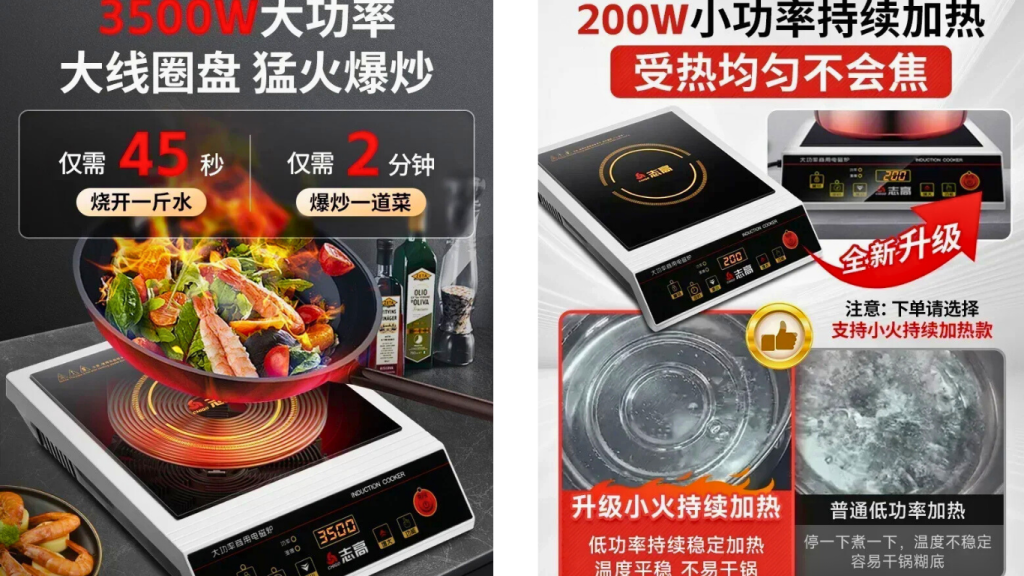
Features of a 5000W Special Commercial Induction Cooker
Now, let’s step into the big leagues. The 5000W induction cooker is designed for serious, heavy-duty cooking. Think large restaurants, hotels, catering services, and industrial-scale kitchens.
Heavy-Duty Cooking Capacity
The 5000W unit can easily handle huge pots and pans. For example, while a 3500W cooker can handle up to 20 liters of soup, the 5000W model can handle 30–40 liters without slowing down. This makes it indispensable for cooking large batches of broth, curries, noodles, and hotpots in a commercial environment.
Durability and Build Quality
Commercial-grade 5000W cookers are often built with:
- Stainless steel frames for durability
- High-temperature resistance for long hours of use
- Industrial cooling fans to prevent overheating during continuous cooking
- Waterproof controls for easy cleaning and safe operation
These features ensure the cooker lasts even under constant, high-stress conditions.
Best Commercial Applications for a 5000W Induction Cooker
- Restaurants serving large crowds
- Hotels with buffet services
- Catering businesses needing fast batch cooking
- Food courts and industrial kitchens
For any business where time is money and efficiency is crucial, the 5000W induction cooker is a no-brainer.
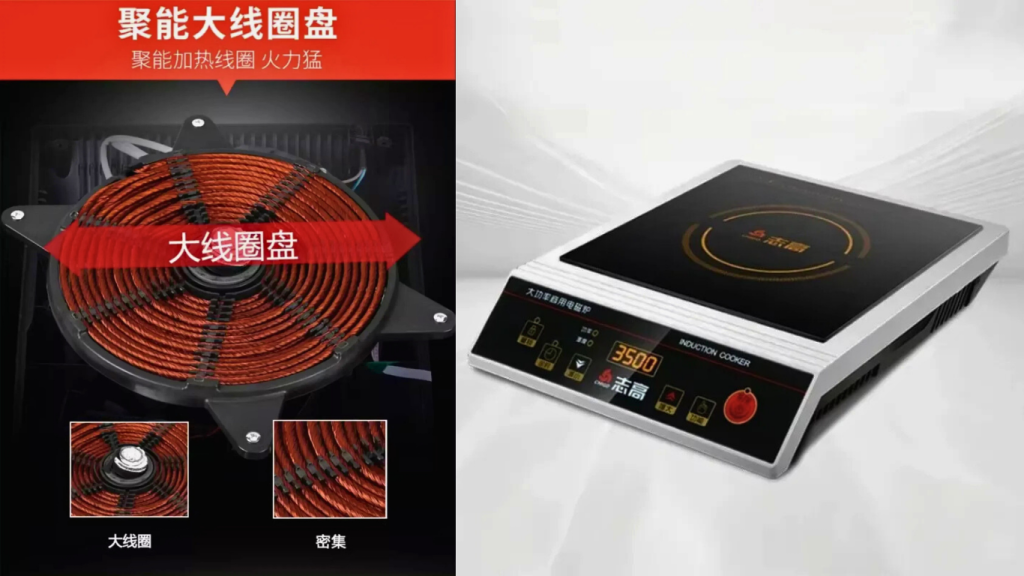
Concave vs. Flat Induction Cooker Surface
One of the interesting features of high-power induction cookers is that they come in different surface designs—mainly concave (wok-style) and flat-top cookers.
Why Concave Surfaces are Popular in Asian Cooking
Concave induction cookers are designed for wok cooking. If you’ve ever been to a Chinese restaurant and seen the chef tossing food in a flaming wok, that’s exactly what these are made for. The concave surface fits the bottom of a wok perfectly, allowing for even heat distribution and intense stir-frying.
Dishes like fried rice, stir-fried vegetables, and noodles benefit greatly from this design. It gives food that authentic “wok hei” (breath of the wok) flavor.
Flat Surface Induction for Western-Style Cooking
Flat induction cookers are more common in Western kitchens. They work with a wide variety of pots and pans, making them more versatile. If your cooking style involves frying pans, saucepans, or griddles, the flat-top design is ideal.
Choosing Between Concave and Flat Cookers
- Choose Concave (Wok-Style): If you cook mainly Asian dishes and prefer stir-fry, hotpots, or deep-frying.
- Choose Flat: If you cook a variety of cuisines, including Western dishes like pasta, steaks, and soups.
In fact, many professional kitchens use both types—a concave cooker for wok dishes and a flat-top for everything else.