
Introduction to Montessori-Inspired Learning Toys
Montessori-inspired toys are more than just playthings—they are gateways to exploration, discovery, and self-guided learning. Unlike conventional toys that might entertain a child for a short while, Montessori toys are designed with purpose. They encourage active participation, problem-solving, and decision-making. The 5-color sorting sensory toy falls perfectly into this category because it combines play with structured learning, giving children the freedom to explore while building foundational skills.
What Are Montessori Toys?
Montessori toys are rooted in the educational philosophy of Dr. Maria Montessori, who believed that children learn best through hands-on experiences. These toys often feature simple designs, natural materials, and open-ended possibilities. Unlike flashy electronic gadgets, Montessori toys are intentionally minimalistic so the child—not the toy—drives the play experience. The 5-color sorting sensory toy, for example, doesn’t rely on sounds, lights, or batteries. Instead, it provides colorful balls and sorting mechanisms that challenge the child’s mind and fingers, making learning feel like play.
Why Montessori Learning Matters in Early Childhood
The early years of a child’s life are crucial for brain development. During this period, children absorb knowledge at an incredible pace. Montessori learning emphasizes independence, curiosity, and self-paced exploration, allowing children to follow their natural interests. Toys like the 5-color sorting sensory game give children the opportunity to experiment with colors, sorting, and organization without being spoon-fed instructions. This builds confidence and nurtures a lifelong love for learning.
The Role of Hands-On Play in Child Development
Hands-on play is essential because children learn by doing. When kids pick up colorful balls, feel their texture, and decide where to place them, they engage multiple senses. This not only strengthens their memory but also enhances problem-solving abilities. Unlike passive screen time, active play encourages critical thinking and creativity. The 5-color sorting sensory toy ensures that children are not just entertained but actively developing cognitive, motor, and sensory skills—all while having fun.
Buy Here
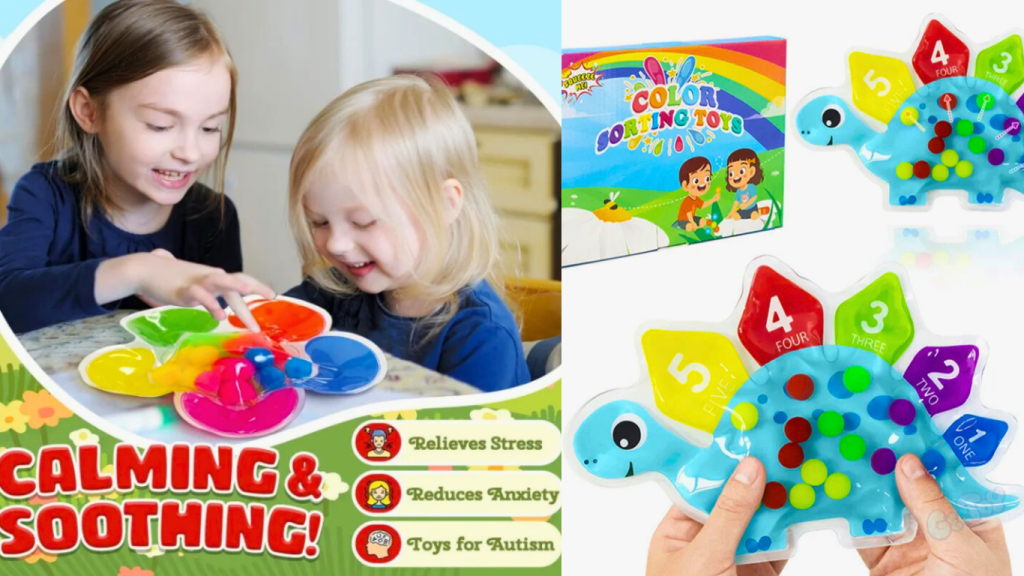
Understanding the 5-Color Sorting Sensory Toy
The 5-color sorting sensory toy is simple yet powerful. At first glance, it may look like a box of colorful balls with slots, but in reality, it’s a thoughtfully designed educational tool. Each component—from the vibrant balls to the sorting tray—serves a purpose in helping kids learn and grow.
Features of the 5-Color Sorting Toy
This toy typically comes with:
- Five distinct colors of balls, usually bright and appealing to young eyes.
- Sorting bowls, cups, or trays that allow children to separate colors.
- Tongs, spoons, or chopstick-like tools to pick up the balls, making play more challenging and skill-building.
- Durable and child-safe materials that can withstand rough play.
Its compact design makes it ideal for home use, classrooms, or even travel. The versatility ensures that children never get bored, as they can invent countless ways to play.
Materials and Safety Standards
Parents are naturally concerned about safety, especially for toddlers who explore the world with their mouths. Fortunately, most Montessori-inspired toys, including the 5-color sorting game, are crafted from non-toxic, BPA-free, and eco-friendly materials. Wooden sets are particularly popular because they are durable, sustainable, and safe. Plastic versions exist too, but parents should ensure they meet international safety certifications.
Age Appropriateness and Recommendations
While this toy is generally recommended for children ages 2 to 6, even younger toddlers can benefit under parental supervision. For older preschoolers, the toy serves as a tool to refine sorting and early math skills. For younger children, it helps them recognize colors and develop fine motor control. The beauty of Montessori learning tools is that they grow with the child, offering new challenges at every stage.
Click Here

Benefits of Color Sorting Games for Kids
Color sorting games may seem simple at first, but their impact on early learning is profound. These activities engage the brain in multiple ways, strengthening both academic and social-emotional development.
Cognitive Development through Sorting Activities
Sorting is a foundational cognitive skill. When children group objects by color, shape, or size, they are learning to recognize patterns, make decisions, and categorize information. These skills are directly linked to problem-solving and logical thinking. The 5-color sorting sensory toy encourages kids to experiment with classification, laying the groundwork for math, science, and reading comprehension in later years.
Enhancing Focus and Concentration
In a world filled with constant distractions, helping children build focus is priceless. Sorting requires patience and attention. A child must carefully observe each ball, determine its color, and place it in the correct tray. This repetitive process strengthens concentration and teaches persistence—two qualities essential for school readiness.
Stimulating Creativity and Curiosity
Even though the toy comes with a clear purpose, children often invent their own games. They may line up the balls in rainbow order, pretend they are ingredients in a cooking game, or use them in imaginative play. This freedom to create nurtures curiosity and encourages divergent thinking—the ability to come up with multiple solutions to a problem.

Fine Motor Skills Development with Sensory Toys
Fine motor skills refer to the small muscle movements in the hands and fingers. These skills are vital for everyday tasks like writing, buttoning clothes, and using utensils. The 5-color sorting toy provides a playful way for kids to strengthen these muscles.
Importance of Fine Motor Skills in Early Childhood
Without well-developed fine motor skills, children may struggle with academic and daily life tasks. Early intervention through play-based learning ensures that kids build strength and coordination in their hands. Fine motor skills are often overlooked, but they form the foundation for writing, drawing, and other essential skills.
How Sorting Toys Improve Hand-Eye Coordination
Using tongs or spoons to pick up small balls requires precision. The child’s eyes guide their hands, creating a direct link between visual input and motor output. Over time, this practice sharpens hand-eye coordination, which is crucial not only for academics but also for sports and daily activities.
Preparing Kids for Writing and Daily Tasks
The repetitive act of gripping, holding, and releasing the colorful balls mimics the fine motor motions required for writing with pencils or using scissors. By strengthening these muscles through play, children gain better control and endurance, making tasks like writing, eating, and self-care easier as they grow.

Sensory Learning and Its Impact on Children
Sensory play is about engaging more than one sense at a time. The 5-color sorting toy provides opportunities for children to touch, see, and sometimes even hear (as the balls clink together). These multisensory experiences help cement learning in the brain.
The Role of Sensory Play in Brain Development
When children engage their senses, they form stronger neural connections. Sorting colorful balls stimulates the visual system, while picking them up engages tactile and kinesthetic senses. This multi-channel input strengthens memory retention and enhances overall learning efficiency.
Tactile Exploration and Problem-Solving Skills
Handling small balls with fingers, tongs, or spoons challenges children to refine their touch sensitivity. This tactile exploration isn’t just about physical skills—it also promotes problem-solving. Kids learn to adapt their grip, adjust their movements, and try again if something doesn’t work, teaching resilience and flexibility.
Encouraging Independent and Self-Paced Learning
One of the greatest benefits of Montessori-inspired toys is their ability to encourage independence. The 5-color sorting game doesn’t dictate how long a child should play or which method to use. Children are free to experiment at their own pace, fostering self-motivation and confidence.