
Introduction to Modern LED Headlights
The automotive lighting industry has undergone a massive transformation in the last two decades. Once upon a time, halogen bulbs dominated the market. They were cheap, easy to replace, and widely available. However, their major downside was inefficiency—they produced a lot of heat while delivering comparatively low brightness. Then came HID (High-Intensity Discharge) lamps, which were brighter but also more expensive and required ballasts for operation. Finally, LED headlights entered the scene, and they changed everything.
LED (Light Emitting Diode) headlights have quickly become the gold standard for modern cars. They consume less energy, produce more light, and last significantly longer than traditional bulbs. In fact, many luxury vehicles now come equipped with LED headlights from the factory, while aftermarket options have made it possible for older vehicles to enjoy the same benefits.
So, why are LED headlights so popular today? It comes down to efficiency, brightness, and longevity. Unlike halogen bulbs that may last just 500 to 1,000 hours, high-quality LEDs can easily last 30,000 to 50,000 hours. That means fewer replacements, lower costs in the long run, and better visibility at night.
The 3D 360 H7 H11 H3 LED Headlights 2000W High Power Canbus set takes these advantages a step further by introducing powerful illumination, wide compatibility with multiple bulb types, and Canbus integration that ensures error-free performance in modern vehicles.
Buy Here
What Are 3D 360 LED Headlights?
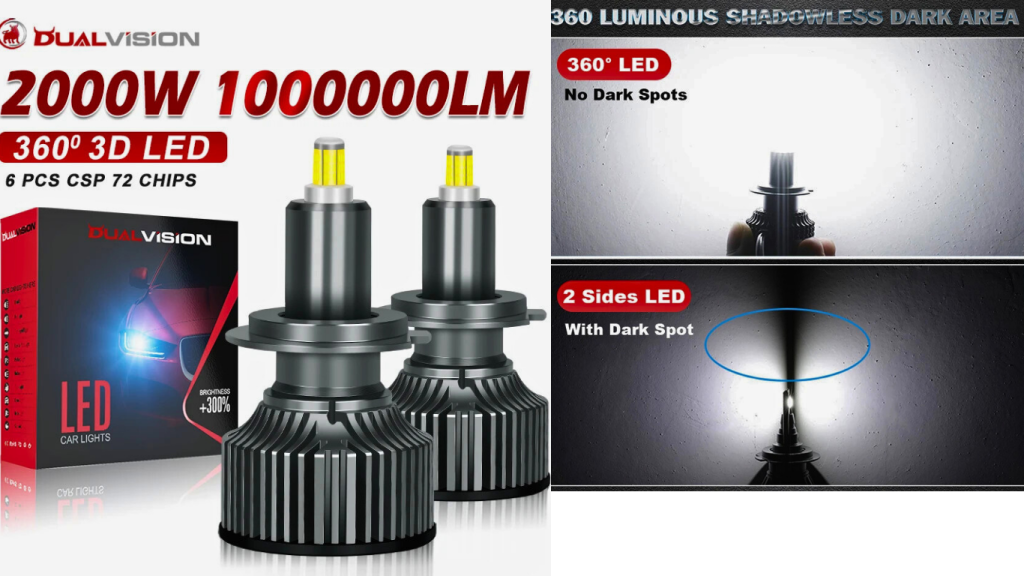
When people hear “3D 360 LED headlights,” they often wonder what makes them different from standard LEDs. The key lies in the beam pattern and coverage. Traditional headlights sometimes suffer from dark spots or uneven illumination. You might notice that while the center is bright, the edges remain dim, creating blind spots on the road.
3D 360 LED headlights are designed to eliminate this problem. By using advanced optical engineering, these lights spread illumination evenly across all angles, giving you a true 360-degree field of vision. Imagine driving down a pitch-dark road where not only the front but also the peripheral areas are clearly visible—that’s the advantage of 360-degree LED headlights.
The “3D” design adds another layer of performance. Unlike flat or one-directional LED chips, the 3D configuration places LEDs strategically around the bulb, mimicking the natural output of halogen bulbs but with far superior brightness. This ensures that the headlights work perfectly with your car’s reflector or projector housing, delivering a focused beam without blinding oncoming traffic.
For drivers who often travel at night, especially on rural or poorly lit roads, 3D 360 LED headlights offer peace of mind. They enhance visibility not just for you but also make your car more noticeable to others, improving overall safety.
Technical Specifications of 2000W High Power LED Headlights
When choosing LED headlights, specifications matter. The 3D 360 H7 H11 H3 LED Headlights are marketed as “2000W high power,” but what does that really mean? Let’s break it down.
Wattage and Brightness Explained
Wattage indicates how much power a bulb consumes. While halogen bulbs often convert much of their wattage into wasted heat, LEDs use power more efficiently, converting it directly into light. A 2000W equivalent LED doesn’t literally consume 2000 watts but delivers brightness comparable to or exceeding halogens of that range. In practical terms, these headlights provide intense luminosity that rivals daylight, ensuring crystal-clear vision.
6000K Color Temperature – What It Means for Drivers
Color temperature is measured in Kelvins (K). At 6000K, these headlights produce a bright white light with a slight bluish tint. This color closely resembles daylight, which reduces eye strain and makes road signs, lane markings, and obstacles more visible. Compared to yellow halogen bulbs, 6000K light appears sharper and more modern.
Canbus Compatibility and Why It Matters
One of the common issues with upgrading to LED headlights is dashboard errors. Many modern vehicles have a Canbus (Controller Area Network Bus) system that monitors electrical components. If it detects irregular power usage, it can display a “bulb out” warning or even disable the light. Canbus-compatible LED headlights are designed to communicate seamlessly with these systems, eliminating errors and ensuring proper functionality. This makes the 2000W high power Canbus LEDs a plug-and-play solution for most vehicles.
Click Here
Supported Bulb Types (H1, H3, H7, H8, H9, H11, HB3, HB4, 9005, 9006, 9012, HIR2)
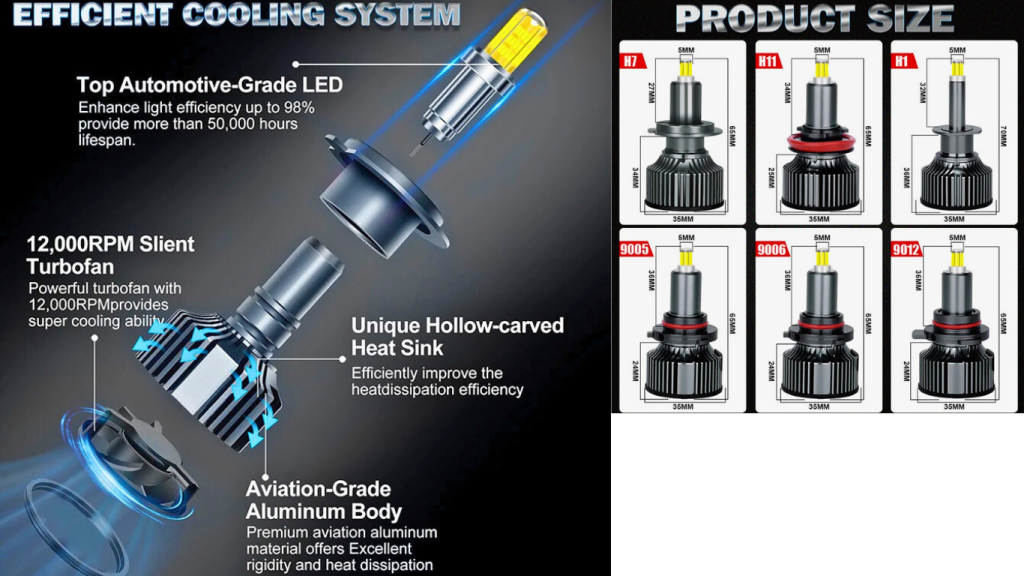
One of the biggest strengths of the 3D 360 LED headlights is their wide compatibility with multiple bulb types. But what do these codes—H1, H3, H7, etc.—really mean?
Overview of Different Headlight Socket Types
Each code represents a different socket design and use case. For example, H1 and H3 are commonly used in high beams and fog lights, while H7 and H11 are popular for low beams. HB3 and HB4 correspond to 9005 and 9006, which are widely used in North American vehicles.
How to Choose the Correct Type for Your Vehicle
The easiest way to know your vehicle’s bulb type is to check the owner’s manual or the existing bulb itself. Some online compatibility checkers can also help. It’s crucial to match the socket type because even though the LED bulb might look similar, it won’t fit if the base doesn’t match.
Comparison Table of Socket Types and Applications
| Bulb Type | Common Use | Example Vehicles |
|---|---|---|
| H1 | High beam, fog lights | European sedans, SUVs |
| H3 | Fog lights | Off-road vehicles |
| H7 | Low/high beams | Audi, BMW, VW |
| H11 | Low beams, fog lights | Toyota, Honda, Nissan |
| HB3 (9005) | High beam | Ford, Chevrolet |
| HB4 (9006) | Low beam | Dodge, Jeep |
| 9012 (HIR2) | Projector headlights | Chrysler, GM |
This wide range of support makes these LEDs a universal solution, saving drivers the hassle of searching for brand-specific bulbs.
Advantages of Turbo Car Lamp Fog Lights
Fog lights serve a different purpose compared to headlights. While headlights are designed for long-distance illumination, fog lights are aimed low and wide to cut through fog, rain, and snow. The 3D 360 LED set includes fog light compatibility, and here’s why that matters.
Fog Light Performance in Harsh Weather Conditions
Driving in dense fog or heavy rain can be extremely dangerous if your headlights reflect light back into your eyes. LED fog lights solve this problem by producing a sharp, low beam that stays close to the road surface. This helps highlight lane markings, curbs, and obstacles without creating glare.
Why Turbo Cooling Technology Improves Lifespan
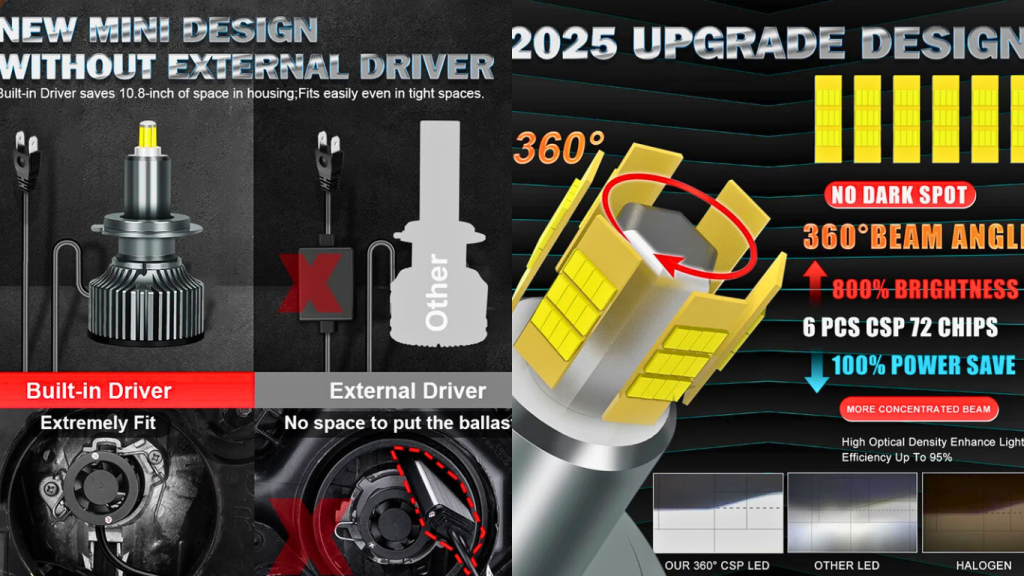
High-power LEDs generate heat, and excessive heat can shorten their lifespan. That’s where turbo cooling fans come in. These small but powerful fans are integrated into the base of the LED bulb, rapidly dissipating heat to maintain optimal operating temperatures. This not only extends the lifespan of the bulb but also ensures consistent brightness without dimming.
Efficiency and Energy Savings
Compared to halogen fog lights, LED fog lamps consume far less power while delivering much stronger performance. This efficiency reduces strain on your vehicle’s electrical system and contributes to overall fuel savings.