
Introduction to Rich Dad Poor Dad
When it comes to personal finance, very few books have made as big an impact as Rich Dad Poor Dad by Robert Toru Kiyosaki. First published in 1997, this book has transformed the way millions of people think about money, investing, and financial independence. What makes it different from other financial guides is its storytelling style—rather than bombarding readers with technical jargon, Kiyosaki explains financial concepts through the lens of two father figures in his life: one rich and one poor.
The beauty of the book lies in its simplicity. Instead of presenting spreadsheets, charts, or complex investment theories, Kiyosaki focuses on mindset, habits, and financial literacy. His core philosophy challenges the traditional idea of going to school, getting good grades, and landing a stable job as the ultimate pathway to success. Instead, he emphasizes building assets, creating passive income, and developing financial intelligence as the true keys to wealth.
Over the decades, Rich Dad Poor Dad has been translated into dozens of languages and sold more than 40 million copies worldwide. It’s not just a book—it’s a movement. Schools, businesses, and even governments have adopted its principles to encourage financial education. More importantly, it continues to spark conversations around money management in households across the globe.
The impact of this book is especially strong because it doesn’t only target adults. Kiyosaki makes a strong case for why financial education should begin in childhood, shaping the money beliefs of young readers early on. This makes it not just a personal finance book for adults, but also a valuable educational resource for parents and children.
In short, Rich Dad Poor Dad is more than just a financial guide—it’s a call to rethink how we see money, work, and success in life. It’s a wake-up call for anyone who has ever wondered why some people become wealthy while others remain trapped in the endless cycle of working just to pay bills.
Buy Here
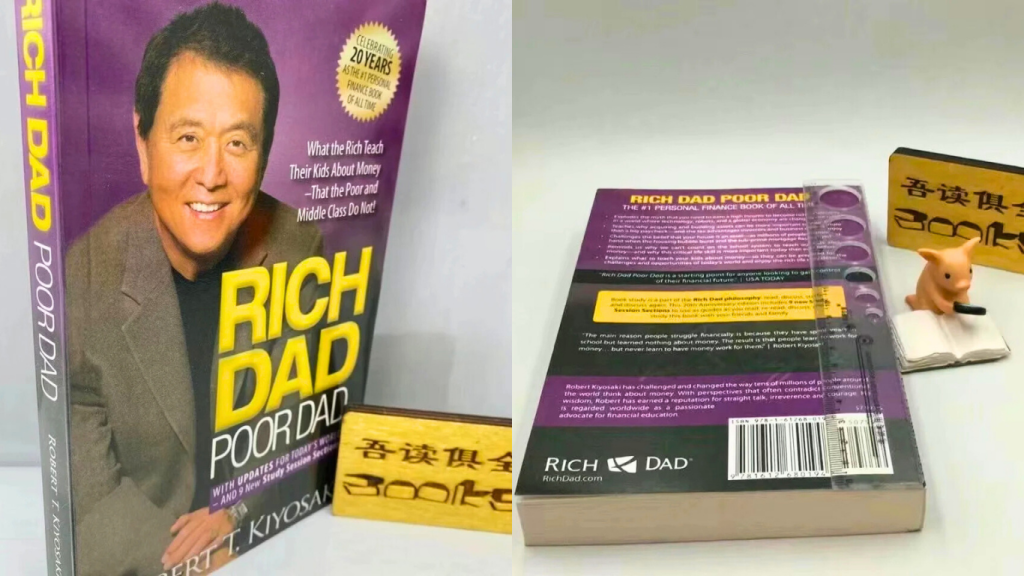
The Author Behind the Book: Robert Toru Kiyosaki
Robert Toru Kiyosaki isn’t just an author—he’s an entrepreneur, investor, and motivational speaker. Born in Hawaii in 1947, Kiyosaki grew up in a middle-class household. His father, who he refers to as his “Poor Dad” in the book, was a well-educated academic who worked hard, valued job security, and believed in the traditional path of education leading to a career.
But young Robert had another influence in his life—his best friend’s father, a businessman with a knack for investments and entrepreneurship. This man became the “Rich Dad” in Kiyosaki’s story, teaching him lessons about money that were drastically different from what his biological father believed.
Kiyosaki’s real-life experiences of learning from these two contrasting father figures became the foundation of Rich Dad Poor Dad. After serving in the Marine Corps during the Vietnam War, Kiyosaki tried different ventures—from selling Xerox machines to starting businesses. Some of his businesses failed, while others succeeded, but through it all, he gained valuable financial lessons that shaped his philosophy.
Beyond the book, Kiyosaki has built an empire of financial education tools. He founded Cashflow Technologies, Inc., which manages the Rich Dad brand and offers games, workshops, and courses on financial literacy. His board game “CASHFLOW” became another creative way to teach money management, further expanding his influence.
Robert Kiyosaki’s teaching style is straightforward, blunt, and often controversial. He doesn’t shy away from criticizing the traditional education system for neglecting financial literacy. He challenges people to think differently, embrace entrepreneurship, and stop relying on employers or governments for financial security. This rebellious approach has made him a household name and a trusted voice in personal finance.
In essence, Kiyosaki is more than just the author of a bestselling book—he is a financial educator who has dedicated his life to spreading knowledge about money in a way that is accessible, practical, and relatable.
Click Here
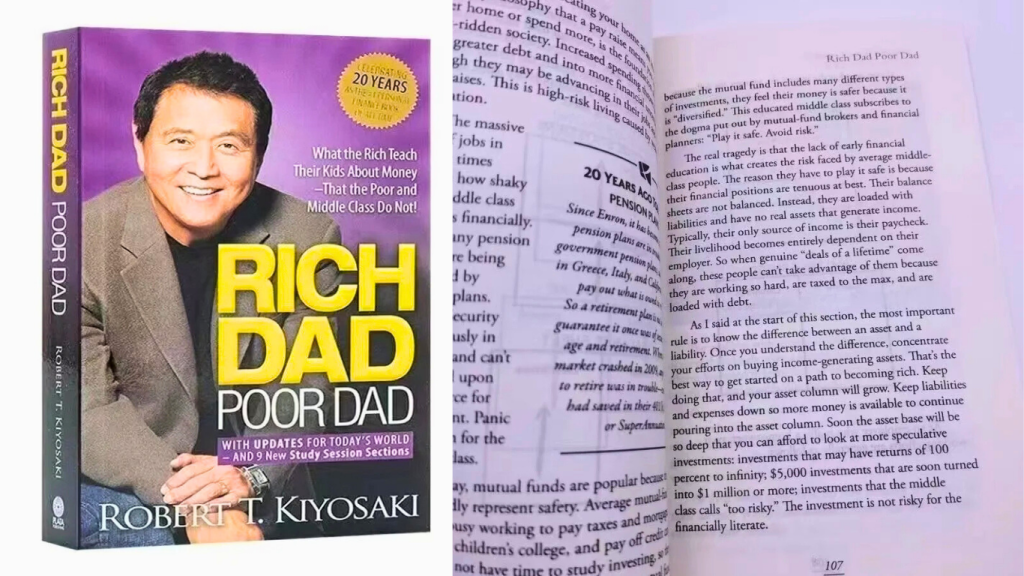
Why Rich Dad Poor Dad Became a Global Phenomenon
One might wonder—why did this book, out of all the personal finance guides out there, strike such a powerful chord with people worldwide? The answer lies in its relatability and storytelling. Instead of dry financial lectures, Kiyosaki presents money lessons through a narrative that feels personal and engaging.
The contrast between the “rich dad” and “poor dad” makes readers reflect on their own upbringing and financial beliefs. Many people realize they were raised with the “poor dad” mindset—study hard, get a good job, work until retirement, and hope for stability. This message resonates deeply because it mirrors the lives of millions who feel stuck in the same cycle.
Another reason for its global success is accessibility. The book isn’t filled with complicated investment strategies that only Wall Street experts can understand. Instead, it focuses on the basics—knowing the difference between assets and liabilities, the importance of financial education, and the value of entrepreneurship. These are lessons that can be applied by anyone, whether they live in the U.S., Asia, Europe, or anywhere else.
The timing of its release also played a role. In the late 1990s, people were becoming increasingly aware of financial insecurity despite following traditional career paths. Debt levels were rising, job security was decreasing, and the stock market was becoming more accessible to everyday investors. Rich Dad Poor Dad offered an alternative way of thinking—one that felt empowering in uncertain times.
Moreover, Kiyosaki didn’t stop at just writing a book. He turned Rich Dad Poor Dad into a brand, with seminars, workshops, games, and companion books that deepened the financial lessons. This multi-platform approach made it more than just a book—it became a lifestyle for many who wanted to change their financial future.
It’s not just the book’s popularity but its influence that’s remarkable. Generations of readers credit Rich Dad Poor Dad as the turning point in their financial journey, the spark that encouraged them to invest, start businesses, and seek financial freedom.
RICH DAD POOR DAD by Robert Toru Kiyosaki
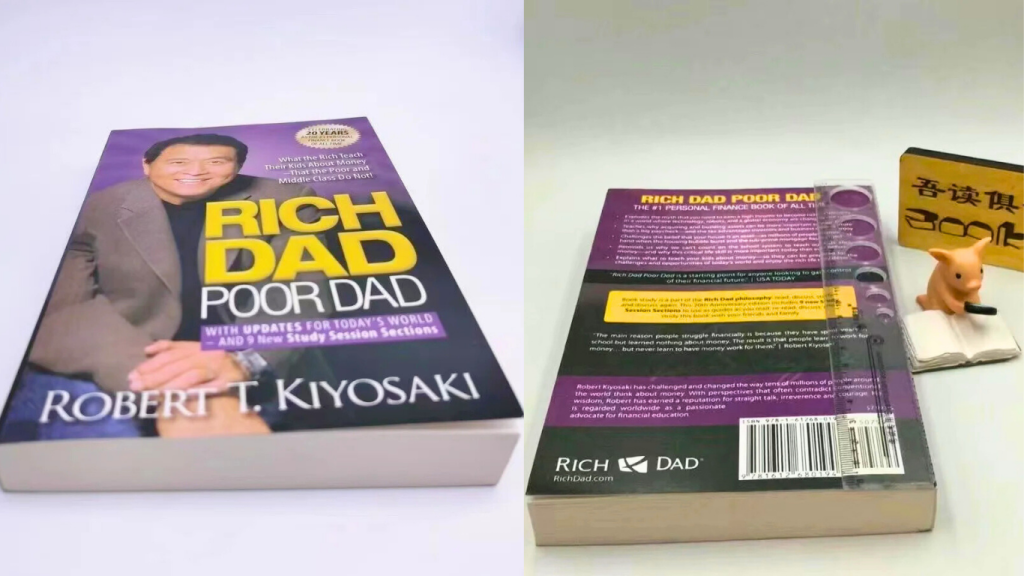
The Core Philosophy of the Book
At its heart, Rich Dad Poor Dad teaches one fundamental lesson: financial independence comes from building assets, not just earning a paycheck. The book explains that most people spend their lives working for money, but the wealthy learn how to make money work for them.
The philosophy revolves around several key principles:
- Assets vs. Liabilities: Wealthy people focus on acquiring assets (things that put money into their pocket, like investments, real estate, and businesses) instead of liabilities (things that take money out, like debts, loans, or luxury purchases).
- Financial Education: Unlike traditional schooling, financial education teaches how money works, how to invest, and how to manage risks.
- Mindset Shift: A rich mindset looks for opportunities and ways to grow wealth, while a poor mindset fears risks and relies on job security.
- Entrepreneurship and Investing: Instead of being an employee forever, Kiyosaki emphasizes the importance of owning businesses, creating passive income, and building wealth through smart investments.
The philosophy is not about rejecting education or jobs but about recognizing their limitations. Schools may teach history, science, or literature, but they rarely teach financial literacy. Jobs may provide income, but they don’t always guarantee financial freedom. By learning to think differently, individuals can break free from the cycle of living paycheck to paycheck.
In a nutshell, the core philosophy of Rich Dad Poor Dad is about empowerment—taking control of your financial future instead of letting circumstances dictate your life.
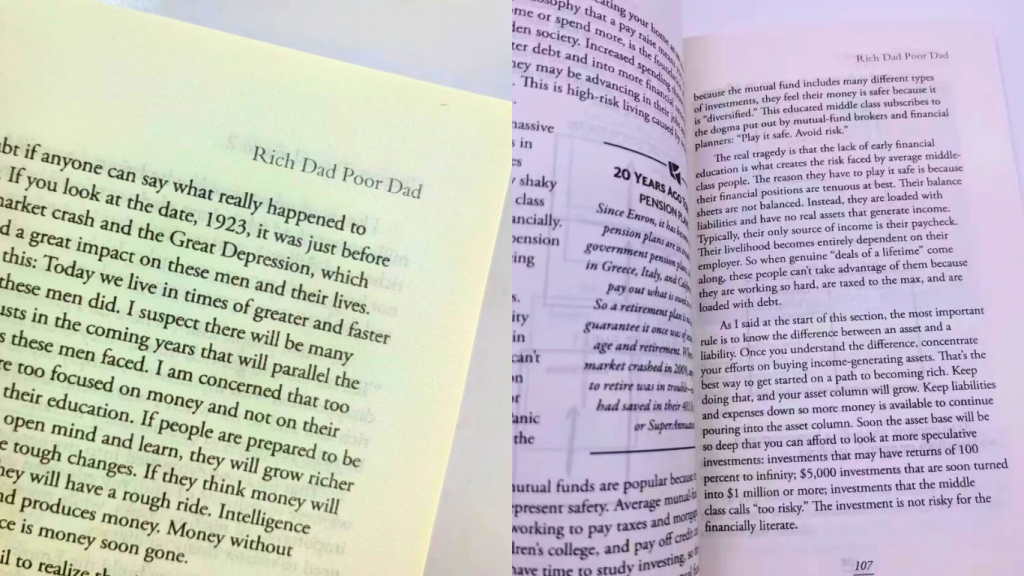
The Two Fathers Concept
Perhaps the most captivating element of Rich Dad Poor Dad is the story of the two father figures who shaped Kiyosaki’s money beliefs. This storytelling device not only makes the book engaging but also serves as a mirror for readers to compare their own financial influences.
Who Was the “Rich Dad”?
The “Rich Dad” was actually the father of Kiyosaki’s childhood friend. This man, although not highly educated in the traditional sense, was financially savvy. He was an entrepreneur, investor, and businessman who understood how money worked. Instead of encouraging young Robert to “go to school and get a safe job,” he taught him about risk-taking, asset-building, and financial independence.
Rich Dad’s approach was hands-on. He gave Kiyosaki real-world lessons about money, including how to spot opportunities, how to build businesses, and how to create wealth that lasts. He showed that financial intelligence was more valuable than formal education when it came to achieving financial freedom.